Technology
How to use this year's budget for a data discovery or AI readiness assessment
Budget left before your year-end? Book a PTR Data Discovery or AI Readiness Assessment now, pay before your financial year closes and start within six months. What each covers, how to choose and what to ask your finance team.

Published
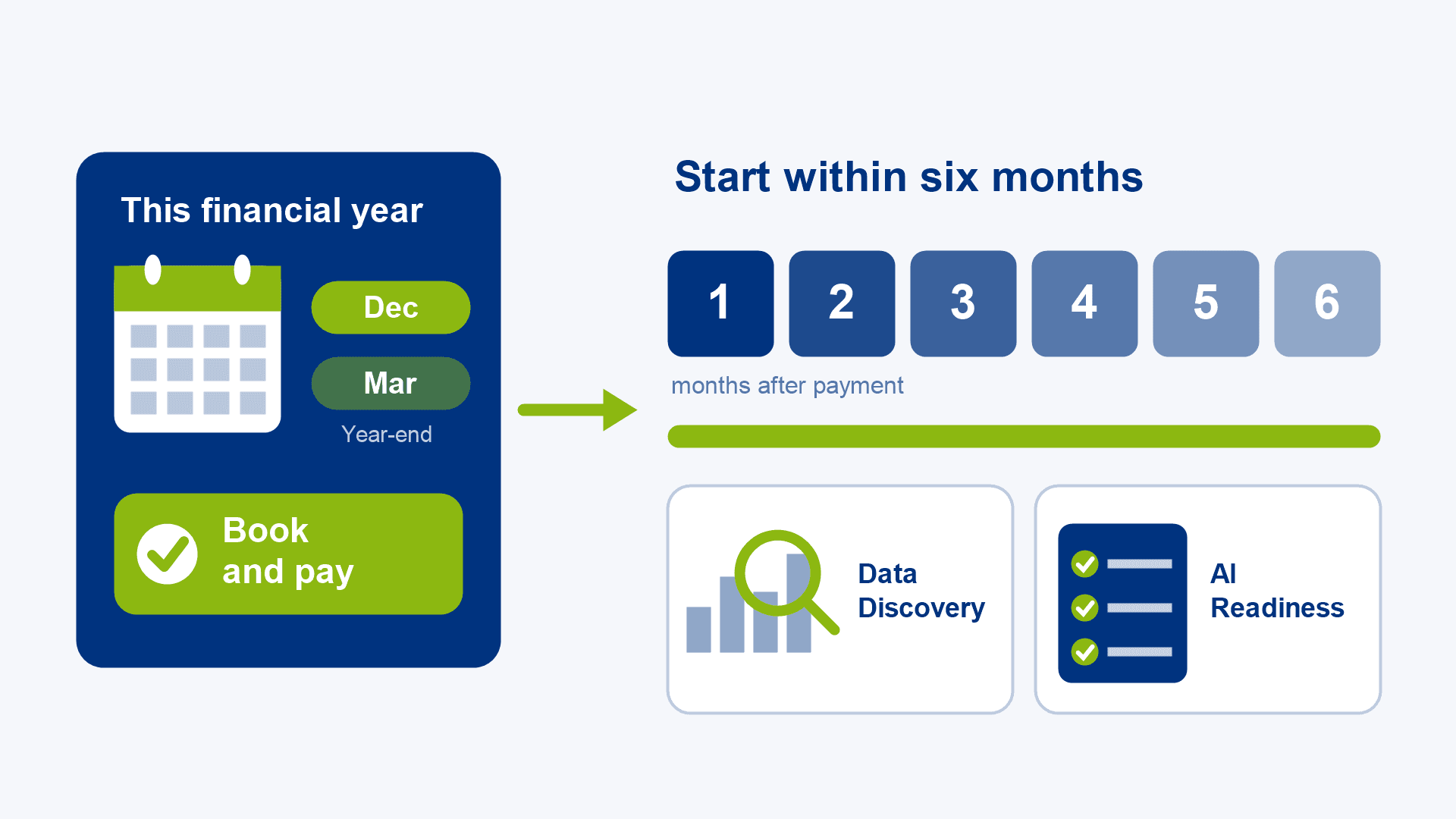
If you have budget left before your financial year ends, you can book a PTR Data Discovery or AI Readiness Assessment now, pay before your year-end and start the work at any point in the six months after you pay. A Data Discovery gives you an independent view of your data estate and a costed plan. An AI Readiness Assessment tests whether your data is ready for the AI use cases you have in mind. Check with finance how they treat a payment for work that starts next year, then choose the one that answers your most pressing question.
It is the last week of November. The IT director has two emails open. One is from finance: any budget not committed by the year-end goes back. The other is from the chief executive, asking when the business will "do something with Copilot". Nobody has time to start a project before Christmas, and nobody is quite sure what state the data is in.
Think of it like a survey before you buy a house. You would not commit to the biggest purchase of the year without someone looking at the roof, the wiring and the damp first. A data discovery or AI readiness assessment does the same job before you commit 2027 budget to a new platform or an AI rollout, and this year's budget can pay for it.
What does "use it or lose it" mean for a data budget?
In most organisations, budget that is not spent or committed by the financial year-end goes back. It does not roll over, and an underspend can make next year's request harder to defend. For data and IT budgets, the pressure to spend quickly often goes on licences or hardware nobody planned for, while the questions that hold up next year's projects stay unanswered.
The deadline depends on your year-end. Many companies close their books on 31 December. The UK government's financial year, and with it much of the public sector, runs from 1 April to 31 March, and many private companies use a March year-end too.
What tends to happen in the rush:
- Licences are bought ahead of need and sit unused.
- A small project is squeezed into December, when the people it needs are busiest.
- The money goes back, and the 2027 plan starts from assumptions about the data rather than evidence.
Can you pay for a data discovery this year and start next year?
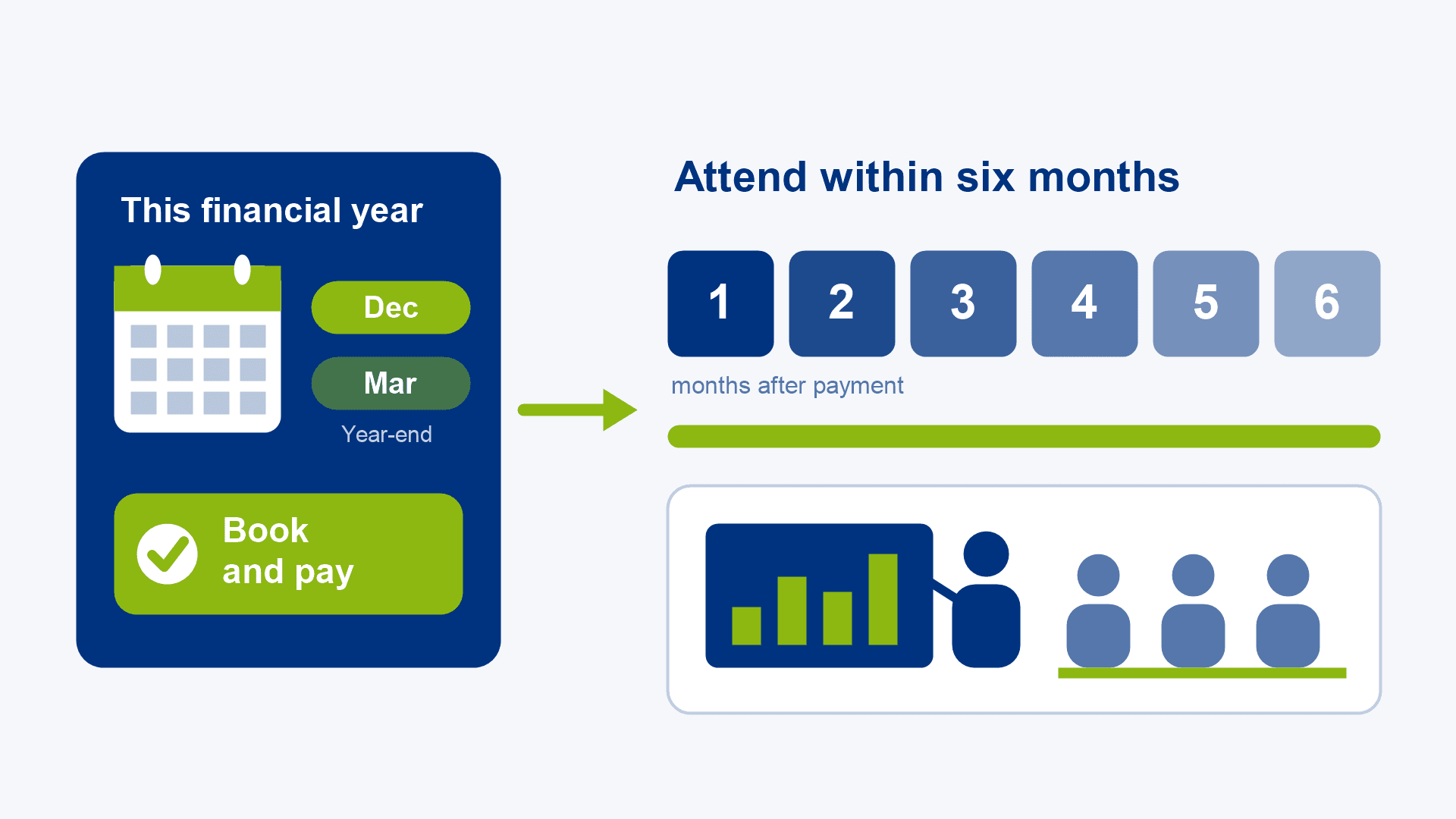
Yes. Book a PTR Data Discovery or AI Readiness Assessment now, pay before your financial year-end, and we start the work at any point in the six months after you pay. That suits both December and March year-ends, and means the work can be timed for when your people are available.
How it works:
- Talk to us, or book the free one-hour discovery workshop, so we can agree the question and the right scale of work.
- We agree a fixed scope and price, and invoice so you can pay before your year-end.
- We agree a start date within six months of payment.
- One named consultant leads the work from start to finish, and you keep everything it produces.
Back to the house survey: the value is in what the surveyor finds, so pick a start date when the people who know your systems can give it their time.
What does a PTR data discovery include?
A Data Discovery is a short, structured, fixed-price review of your data estate: your systems and platforms, data quality, how people use data and what the business needs from it. We talk to the people who build and run the systems and the people who rely on them, then look at the systems themselves. It comes in three depths (3, 5 or 10 days) and ends in a plan you can act on.
The three depths, as published on our Data Discovery page:
Depth | Best for | Your team's time | What you get |
Lite (3 days) | A focused technical question, such as a platform choice or running-cost estimate | About 4-6 hours, mostly your technical lead | Current-state summary, technical recommendations, indicative costs, a findings call |
Standard (5 days) | Decisions that change how the business uses data, such as a new platform or migration | About 10-15 hours across technical and business staff | Adds source system and data quality findings, a prioritised and costed roadmap, a stakeholder playback |
Deep Dive (10 days) | Organisation-wide change | About 25-35 hours across teams and leadership | Adds a data governance framework, data literacy and skills design, a leadership business case and an executive briefing |
It is fixed price, starting from £3,750 ex VAT, delivered with on-site workshops and remote work. There is no obligation to continue with PTR: the plan is yours, whether you carry it out with us, with your own team or with another partner.
Typical questions a discovery answers include whether Microsoft Fabric suits you or something simpler would do, how it would sit alongside platforms you already have, what your current platform costs to run, where your Power BI reporting should go next, and whether your data and governance are ready for Copilot.
What does an AI readiness assessment tell you?
An AI Readiness Assessment shows, with evidence, whether your data, platform, governance and people are ready for the AI use cases you want to run. It typically takes three to five days and ends with a picture of where you are against where you need to be, technical recommendations and a roadmap you keep. It is grounded in Microsoft Fabric, Azure and Purview, but not tied to any one AI tool.
We interview the people who use and manage the data, review the platform and architecture, and profile the data behind your priority use cases. The AI Readiness Assessment answers six questions:
- Is the data integrated, accurate and current?
- Are key business terms and metrics clearly defined?
- Is the data governed and compliant, so AI sees only what it should?
- Can AI tools reach the data safely?
- Which use cases are worth pursuing?
- Are the people ready, or is there a skills gap?
It suits organisations under pressure to act on AI but unsure which use cases are realistic, teams whose Copilot or AI pilot gave weak answers, and anyone worried about what an AI assistant might surface from old shared drives or SharePoint sites. As we put it on our AI readiness page, AI tools don't fix data problems, they amplify them.
Should you choose a data discovery or an AI readiness assessment?
Choose a Data Discovery when the open question is about your data estate as a whole: platforms, migration, reporting or running costs. Choose an AI Readiness Assessment when the board is already asking about AI and you need to know which use cases your data can support. If you are unsure, the free one-hour discovery workshop is there to help you decide.
If your most pressing question is... | Start with |
"Should we move to Microsoft Fabric, and what would it cost to run?" | Data Discovery (Lite or Standard) |
"Our reports disagree and nobody trusts the numbers" | Data Discovery (Standard) |
"We need a data strategy, governance and skills plan for the whole organisation" | Data Discovery (Deep Dive) |
"Our Copilot pilot gave poor answers" | AI Readiness Assessment |
"Which AI ideas are worth pursuing, and what do we fix first?" | AI Readiness Assessment |
"We don't know where to start" | Free one-hour discovery workshop |
How the options for leftover budget compare:
Option | What you get | What to watch |
Book a discovery or assessment now, start within six months | Evidence and a plan before 2027 decisions are made | Check how finance treats the payment |
Rush a small project into December | Budget spent this year | The people it needs are at their busiest |
Buy licences ahead of need | Budget spent this year | Licences sit unused while the data questions remain |
Let the budget lapse | Nothing | The questions stay, and next year's budget may shrink |
What does a discovery usually find?
Most often, that the same measure means different things in different places, that nobody owns some of the data the business relies on, and that the platform costs or limits are not what people assumed. Finding these before a build starts is far cheaper than finding them halfway through, or after an AI tool has started quoting the wrong figures.
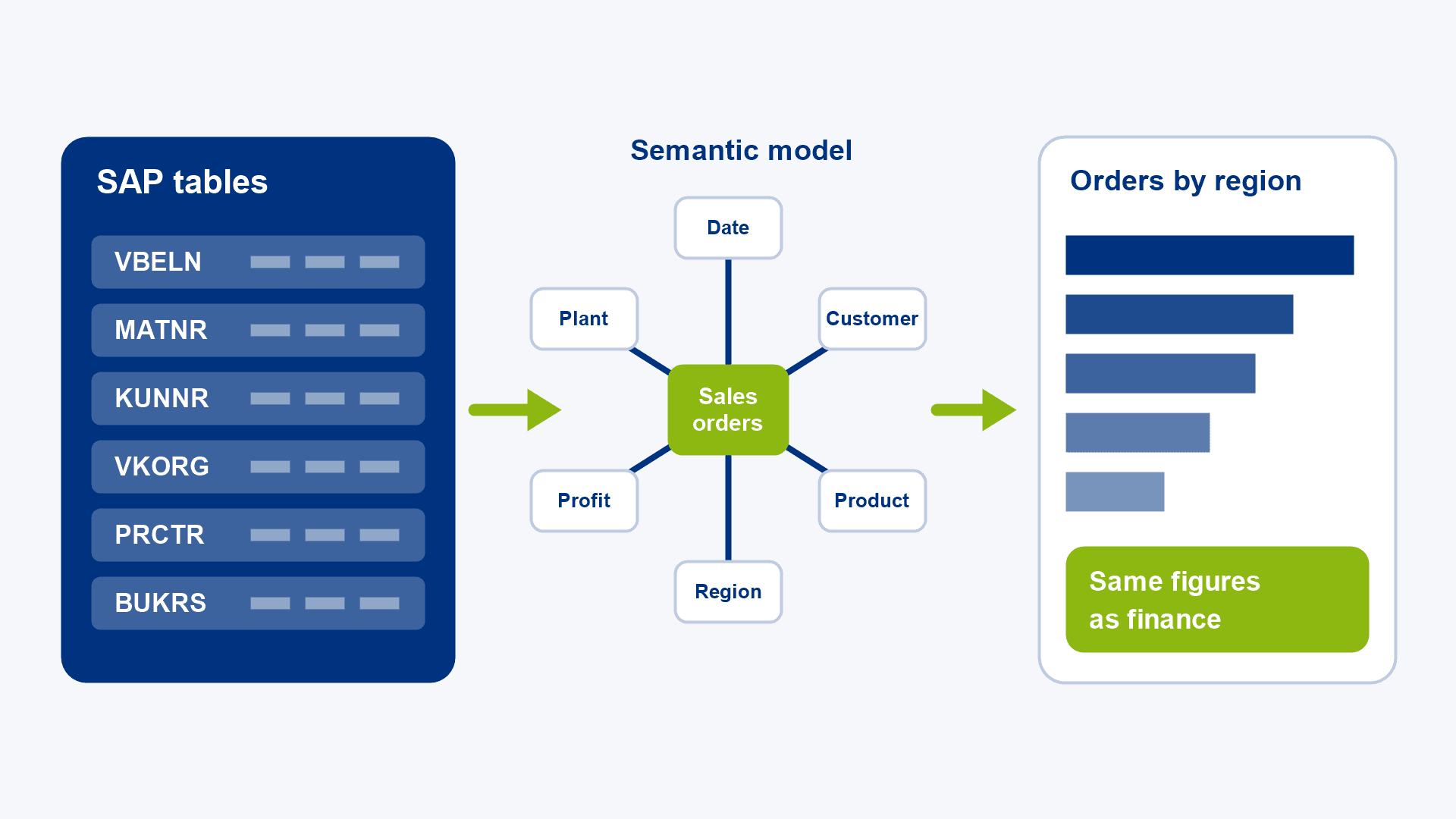
One example from our published case studies: a client's Finance team reported Project Profit of £1.6 million while Project Management reported £1.2 million. Both were right by their own rules, and aligning them took three to four days every month. Once the definitions were agreed in Data Dictionary workshops and built once into a Power BI semantic model, reconciliation fell to under an hour, with 94% fewer ad hoc data requests. You can read how we aligned Finance and Project Management reporting.
That is the kind of issue a discovery puts on paper, so the 2027 plan deals with it first. It is also the kind of issue that makes AI answers unreliable, which is why both assessments look hard at definitions.
Will your finance team accept payment for work that starts next year?
Usually, but check first. How a payment for consultancy delivered next year is treated depends on your organisation's rules. Some budgets count the money when the invoice is paid. Under accruals accounting, finance may record it as a prepayment and charge the cost when the work is done. Public bodies often have rules on paying in advance.
Questions to ask your finance team before you book:
- Does a payment made this year for work starting next year come out of this year's budget?
- Do you need a purchase order raised before the year-end, or a paid invoice?
- Are there rules on paying suppliers in advance, and is a six-month start window acceptable?
- Does procurement need anything from us, such as a scope document or our Cyber Essentials certificate?
If finance needs a particular invoice date or wording, tell us when you book.
If your training budget has the same deadline, our companion article explains how to use this year's training budget for courses in 2027. How to use this year's training budget for courses in 2027 on the same pay-now terms.
What should you do before your year-end?
To summarise: budget left at the year-end usually goes back, and 2027 decisions about platforms and AI are better made with evidence. Paying now for a discovery or assessment that starts within six months gives you both.
Next steps:
- Ask finance the questions above this week.
- Write down the one question you most need answered before your 2027 data or AI plans go further.
- Book a free one-hour discovery workshop, or contact PTR to agree the scope and a fixed price.
- Pay before your year-end, then agree a start date within six months.
PTR is a Microsoft Solutions Partner Data & AI Azure and has helped organisations with their data for over 35 years. Read more about our data strategy consultancy and our data consultancy services.
MD
Mandy Doward
Managing Director
PTR’s owner and Managing Director is a Microsoft certified Business Intelligence (BI) Consultant, with over 35 years of experience working with data analytics and BI.
Frequently Asked Questions
Couldn’t find the answer you were looking for? Feel free to reach out to us! Our team of experts is here to help.
Contact Us