Microsoft Fabric
Planning for Data Priorities 2027
Data priorities for 2027 are well known, but a list is not a plan. Here is how to assess what you have, test your data for AI, agree definitions and build the skills to run it, with PTR's Data Discovery, AI Readiness Assessment and Fabric training.

Published
How to plan your data priorities for 2027
Where to start, what to assess and who needs skills
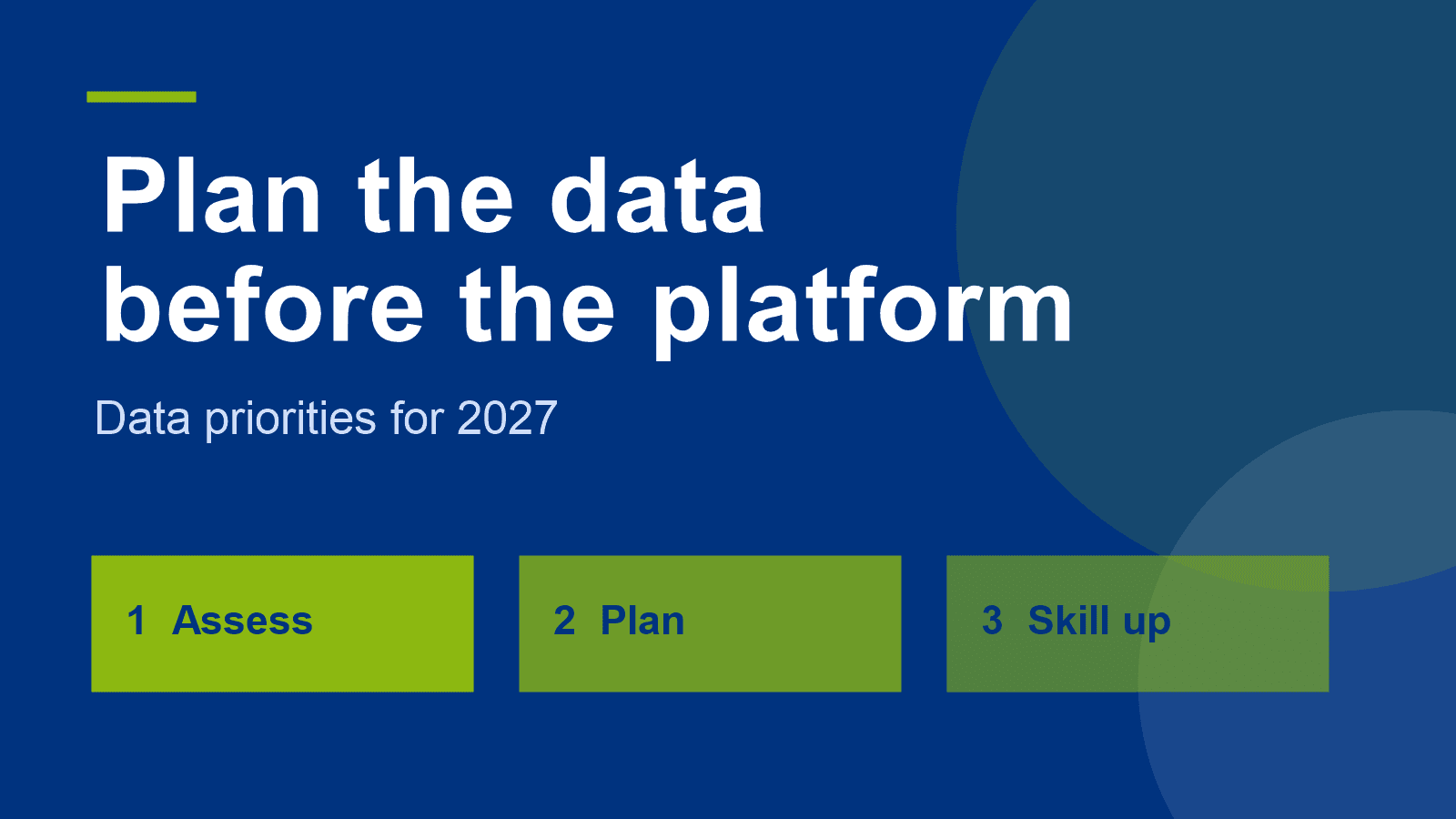
Most organisations already know their 2027 data priorities: quality, security, governance, culture and shared definitions. What they lack is an order of work with owners and costs. Start by finding out what data you hold, test the data behind your AI use cases, agree what your business terms mean, then build the skills to run it. PTR's Data Discovery, AI Readiness Assessment and Microsoft Fabric training each cover one of those steps.
Picture a leadership team in January, opening the autumn paper on data priorities. Data quality, security, governance, shared definitions and AI readiness all have headings. None has an owner, a cost or a start date. By March, the first AI pilot has been approved anyway, and it runs on whatever data the pilot team could reach.
Our recent articles, Data priorities for 2027 (https://www.ptr.co.uk/blog/data-priorities-for-2027) and Which data skills does your team need for 2027? (https://www.ptr.co.uk/blog/which-data-skills-does-your-team-need-for-2027), set out what the research says matters. This article covers what to do next.
Why is a list of data priorities not a plan?
A priority list says what matters. A plan says what to do first, who owns it, what it costs and how you will know it worked. The research agrees on the topics, but only your own data can tell you the order.
BARC's Data, BI and Analytics Trend Monitor 2026 asked 1,579 data, BI and analytics professionals to rate 20 trends. Data quality management and data security and privacy came joint first, both on 7.9 out of 10. Data-driven culture, data and AI governance, and data and AI literacy completed the top five.
Those results are a fair guide to what to worry about. They cannot say which of the five your organisation should fix first, because that depends on what you hold today.
What does a plan add to a list?
- An order, so the work that other work depends on goes first.
- An owner for each priority, named, with time set aside.
- A cost, even if it is an indicative range.
- A measure, such as reports that agree or an AI pilot that passes a data check.
What should you find out first about your data?
Find out which systems hold your important data, who owns it, how good it is, how people use it and what the business needs next. A data discovery does this in a short, fixed scope and finishes with findings and a prioritised plan, so you decide on evidence rather than opinion.
Think of a building survey before an extension. A survey does not build anything. It shows which walls carry the roof and where the damp is, so the builder can price the work and put it in a sensible order. A data discovery plays the same part for your data estate.
PTR's Data Discovery comes in three depths, of 3, 5 or 10 days, at a fixed price. A named consultant leads it from start to finish. It runs in four steps: a scoping call to agree the question and who to involve, workshops with your staff (with hands-on investigation of systems and data from the standard depth up), analysis, and a handover where findings are walked through and refined with you. At the deepest level it also covers a data governance framework, the design of a data literacy and training programme, and a business case for leaders.
Which situations suit a data discovery?
It suits an organisation that is about to commit budget to a new platform, a migration or an AI initiative. Typical triggers are reports that disagree with each other, a data platform with unclear running costs, pressure to adopt Fabric or AI without a plan, Copilot or AI pilots that have stalled, and leaders who need an independent view to support a budget request.
The plan you receive belongs to you. You can use it with PTR, with your own team or with another partner.
How do you know whether your data is ready for AI?
Test the real data behind the AI use cases you want, not the whole estate. Check that it is complete, consistent and current, that business terms are defined, that governance covers it and that an AI tool can reach only what it should. That is the job of an AI readiness assessment.
Gartner reports that a lack of data readiness is a top barrier to AI, and that over 75% of organisations are prioritising investment in AI-ready data. Readiness varies by use case. Data that suits a sales forecast may not suit a customer service assistant.
PTR's AI Readiness Assessment starts with a free one-hour discovery workshop, where we agree your goals and the right size of assessment. We then interview the people who use and manage the data, review the platform and architecture, and profile the real data behind your priority use cases. The aim is to answer six questions with evidence.
What are the six questions?
- Is your data integrated and accurate enough?
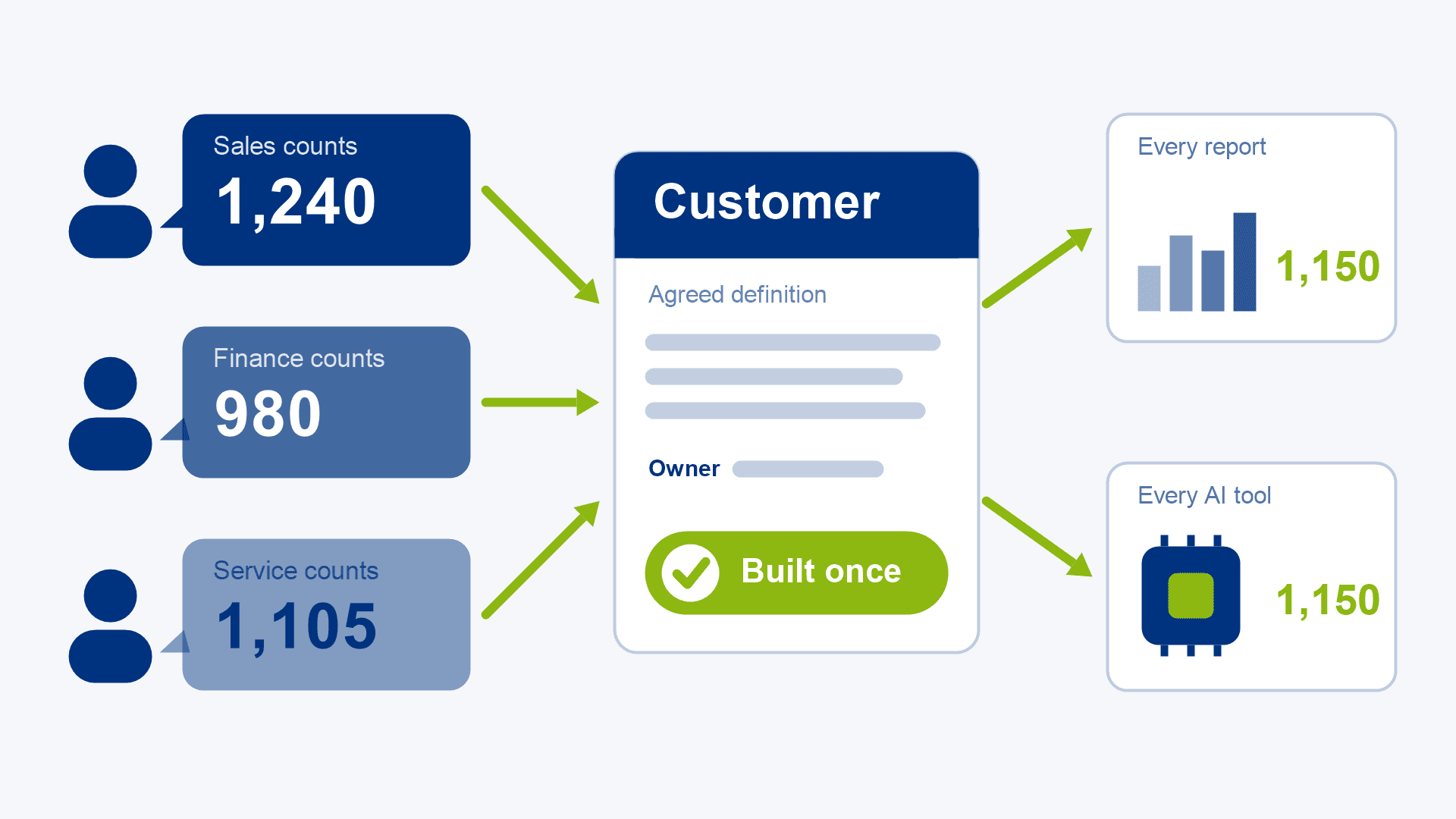
- Are your business terms defined, so that "customer" means the same thing in Finance and in an AI tool?
- Does your governance and compliance cover how AI will use the data?
- Can AI reach your data safely, without exposing what it should not see?
- Which use cases are worth pursuing first?
- Is your team ready to run and maintain them?
The assessment is independent of any single AI tool. It applies whether you are looking at Microsoft 365 Copilot, ChatGPT, Claude or Gemini. For teams preparing a Copilot rollout, it covers the shared drives and older SharePoint sites where access rights have grown unchecked. You keep the roadmap and can use it with any provider.
Which skills does your team need to carry the plan out?
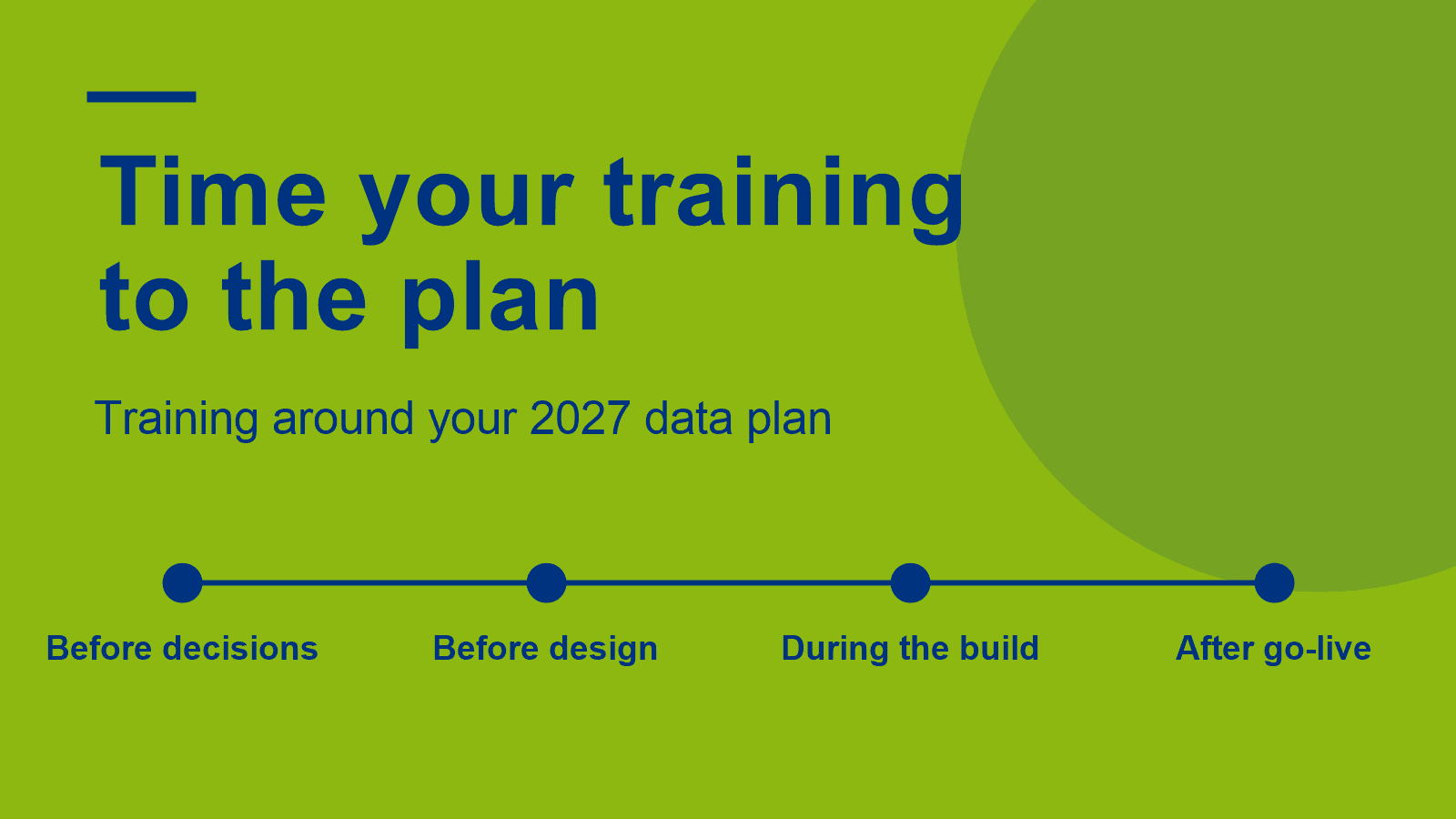
Most 2027 data plans lean on four skills: checking data quality and security, following shared rules for data and AI, working from the same figures, and agreeing what business terms mean. Instructor-led training on your own data builds these faster than leaving people to learn alone.
A plan that needs new habits will fail if people do not understand why. Gartner's March 2026 survey of 223 data and analytics leaders found that 60% cited cultural resistance as a key reason governance initiatives struggle, against 40% who cited funding. Gartner predicts that by 2027, 60% of organisations that fail to address those cultural challenges will fail to govern AI successfully.
Training that uses your own reports and data tackles that directly, because people work through the figures they argue about. Our companion article, Which data skills does your team need for 2027?, covers the four skills in detail.
Which training format suits which need?
- Closed courses run for one group only. They can be run as short sprints, so staff are never away for more than a day at a time.
- Tailored training adjusts the content of an existing course to what you need.
- Bespoke training builds new material around your own systems and data.
Contact PTR for dates and pricing.
Where does Microsoft Fabric fit in a 2027 data plan?
Fabric brings data engineering, warehousing and Power BI together in one platform, so quality, security and definition rules can be applied in one place. Decide on it after you know your priorities and the state of your data. A one-day overview course gives the people commissioning the work a clear map first.
PTR's one-day Understanding Microsoft Fabric Data Platform course is for IT managers, BI leads, project managers and business analysts, and for anyone who commissions, plans or supports data solutions. No specific technical skills are needed. It covers what Fabric is and how it differs from using Azure services and Power BI separately, administration, governance, security and access control, storage options, and choosing a service tier and capacity model. It can be tailored, for example to focus on the areas that matter most if you already use Azure or Power BI or are planning a migration.
PTR is a Microsoft Solutions Partner for Azure Data & AI, and Fabric is the core ecosystem we deliver solutions in. If your discovery or assessment points towards Fabric, our Microsoft Fabric consultancy can design and build it.
How do you choose between a data discovery and an AI readiness assessment?
Choose a data discovery when the question is broad: what do we have, and what should we do first? Choose an AI readiness assessment when the question is narrow: can our data support these AI use cases? Many organisations start with one and use its findings to scope the other.
Data Discovery | AI Readiness Assessment | |
Best when | You are about to commit budget to a platform, migration or AI initiative | You have specific AI use cases or a Copilot rollout in mind |
Looks at | Systems, data quality, how people use data, business needs | The real data behind priority use cases, platform, governance, access, team readiness |
Starts with | A scoping call | A free one-hour discovery workshop |
Ends with | Findings, and (from the standard depth up) a prioritised, costed roadmap | A current-state and target-state picture, recommendations and a roadmap |
Extra at the deepest level | Governance framework, training programme design, business case | Not applicable |
If you are unsure, the free one-hour workshop that begins an AI Readiness Assessment is a low-commitment way to decide.
What should you do in the next 30 days?
- Write down your top five data priorities for 2027 and name an owner for each.
- List the AI use cases your leaders want, and mark the data each one needs.
- Collect the business terms your teams define differently, starting with "customer" and "revenue".
- Decide which question you need answered first, then book a discovery scoping call or an AI readiness workshop.
- Note who needs which skills, so training can be planned alongside the technical work.
If you would like a second opinion on any of these, call PTR on 0118 979 4000 or use our contact page. Tell us which priority is most pressing and we will suggest where to start.
MD
Mandy Doward
Managing Director
PTR’s owner and Managing Director is a Microsoft certified Business Intelligence (BI) Consultant, with over 35 years of experience working with data analytics and BI.
Frequently Asked Questions
Couldn’t find the answer you were looking for? Feel free to reach out to us! Our team of experts is here to help.
Contact Us